The recent gambling-related incidents in the NBA reopened an old wound the league had thought it had already cured. Reports of current and former NBA players being accused of committing nefarious actions, including allegedly faking injuries and trading inside information with gamblers, have many fans concerned about the integrity of the sport.
As much as fans would like to think every game is good, clean competition, there are pockets of these nefarious activities, such as the Tim Donaghy betting scandal, former Toronto Raptors guard Jontay Porter being permanently banned for violating gambling rules, and Miami Heat guard Terry Rozier being arrested in connection with an FBI probe into an alleged sports gambling scheme. These disturbing incidents are ruining the purity of the game and forcing the NBA to make some changes.
The NBA is enacting several sports betting policies for its 30 teams, including changing injury reporting rules, according to ESPN NBA insider Shams Charania. Teams will be required to resubmit injury listings on game day between 11 a.m. and 1 p.m. local time and update public reports every 15 minutes.
Sports is the best reality show. We watch because it takes us through a journey of emotions and we don’t know how it’ll end. With the explosion of sports betting, professional leagues are now in bed with betting sites like FanDuel and DraftKings. It’s getting more difficult not to think that some of these games are scripted. A bad play here or a bad call here, now makes you wonder if the fix is in.
Writer David Hill had this fantastic metaphor about the optics of gambling in sports: “The problem is that among the general public, the optics are unsettling. One day, we regulate betting on sports, and the next, we have a rash of cheating scandals. The common assumption is one of causality, when the truth is that it’s more likely a correlation. When you turn on the light, the cockroaches will scatter. If you turn it off again, they don’t disappear. They’re still there. The question isn’t whether legal betting is corrupting sports — it’s just how corrupt were they all along? And what more can we do — now that the light is on — to clean up the mess?”
NBA commissioner Adam Silver made a guest appearance on “Good Morning America” and addressed the betting scandal. His message to fans worrying about the game’s integrity? “The integrity is absolutely solid,” Silver said. The NBA commissioner said the investigation involving Rozier, who is accused of faking an injury to manipulate a prop bet, was an isolated incident and the league is working on guardrails to prevent another Rozier scandal.
Silver said he was deeply disturbed following the multiple arrests in a sprawling gambling probe, including Portland Trail Blazers head coach Chauncey Billups, Rozier, and former Cleveland Cavaliers assistant Damon Jones.
Silver said there’s nothing more important to the league — and its fans — than the integrity of the game.
It shouldn’t come as a surprise that the NBA is embroiled in a gambling mess. Gambling scandals are nothing new in the sport of basketball. As a matter of fact, it’s a big part of its history.
Here are the biggest basketball-related gambling scandals:
New York City area colleges involved in point shaving scandal (1950s). In 1951, allegations of point-shaving and match fixing in college basketball revealed widespread bribery and corruption involving major colleges and universities in and around New York City. The scandal has been mostly associated with City College of New York (CCNY) in which several players were implicated in point shaving and match fixing.
Boston College point shaving scandal (1978). The scandal involved a scheme in which members of the mafia recruited and bribed multiple Boston College players to manipulate the spread.
Tim Donaghy scandal (2007). Donaghy officiated NBA games for 13 seasons from 1994 to 2007, until he was caught in a gambling scandal. The FBI found Donaghy bet on games he officiated during his last two seasons and made calls that impacted the point spread. He was sentenced to 15 months in federal prison and three years of supervised release for his role in a sports betting scheme.

Michael Jordan gambling escapades (1990s). Jordan paid off a convicted cocaine dealer for gambling debts. In 1993, a book by Richard Esquinas claimed Jordan owed him $1.25 million in golf gambling debts. The NBA investigated Jordan’s gambling habits but ultimately found he did not violate league rules regarding betting on NBA games. The 1993 investigation and Jordan’s subsequent retirement fueled a conspiracy theory that his retirement was a secret suspension.
Gilbert Arenas accused of hosting high-stakes poker games. Former NBA player Gilbert Arenas was arrested in July 2025 on federal charges related to an illegal, high-stakes poker ring he allegedly hosted at his Encino, Calif., mansion from 2021 to 2022. He was charged with operating an illegal gambling business, conspiracy to operate an illegal gambling business, and making false statements to federal investigators.
Jontay Porter was banned for violating gambling rules. Former Toronto Raptors player Jontay Porter, the brother of NBA champion Michael Porter Jr., was permanently banned from the NBA in April 2024 for violating the league’s gambling rules. He admitted to investigators that he schemed to take himself out of games for gambling’s sake, pleading guilty to a federal conspiracy crime in the scandal that already got him banned from the league. After tipping off some of the men, the player claimed injury or illness and withdrew from the Jan. 26 and March 20 games after only minutes on the court, the complaint said. Porter played only briefly on those dates before complaining he was hurt or sick and exiting the games. His points, rebounds, and assists in both games fell below sportsbooks’ expectations.
University of New Orleans point shaving incident. Former University of New Orleans guard Dae Dae Hunter said on ABC’s “Good Morning America” that he participated in point-shaving. Hunter and two New Orleans teammates are among six players who had their eligibility revoked by the NCAA after an investigation. The Committee on Infractions found that Hunter, Dyquavian Short and Jamond Vincent, Arizona State’s Chatton “BJ” Freeman and Mississippi Valley State’s Donovan Sanders and Alvin Stredic either manipulated their performances to lose games, not cover bet lines or ensure certain prop bets were reached, or provided information that enabled others to do so during the 2024-25 regular season.
Gambling is deeply embedded in the sports landscape. With technological advancements and the ubiquity of mobile apps, placing bets has become easy.
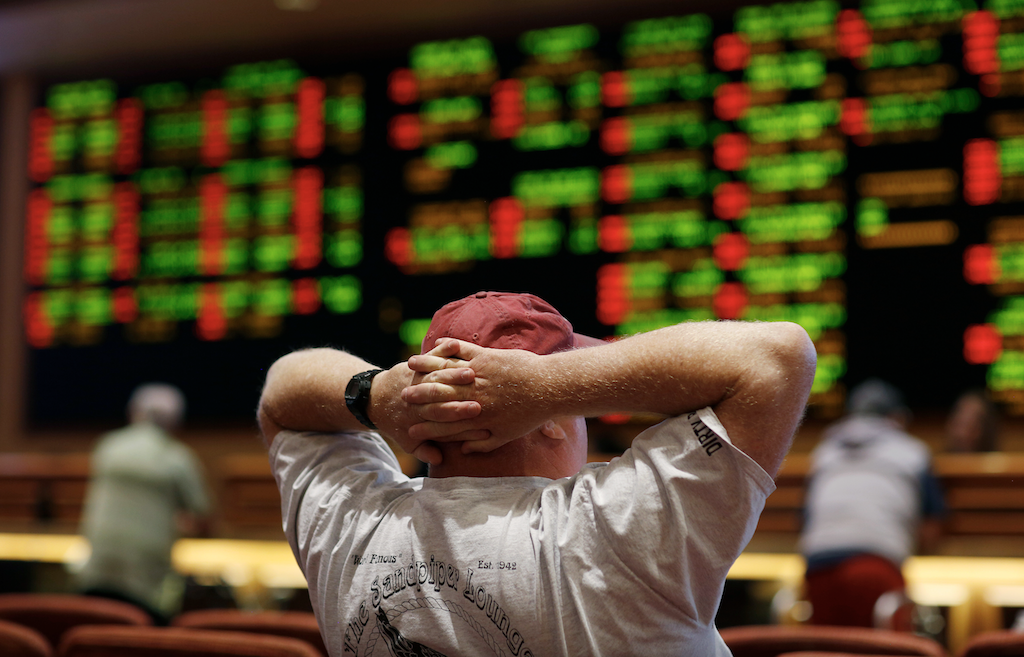
Americans are more skeptical of legal sports betting than they were a few years ago, according to a Pew Research Center poll conducted over the summer. The survey found that about 4 in 10 U.S. adults say the fact that sports betting is now legal in much of the country is “a bad thing” for society and sports, up from about one-third in July 2022.
Younger adults are more likely than older adults to have bet money on sports in the past year, according to a Pew poll, with about 3 in 10 adults under the age of 30 saying this, compared with only 12% of adults age 65 or older.
Is there a fix for the problem? Unfortunately, the fix is in, and there is no turning back.