

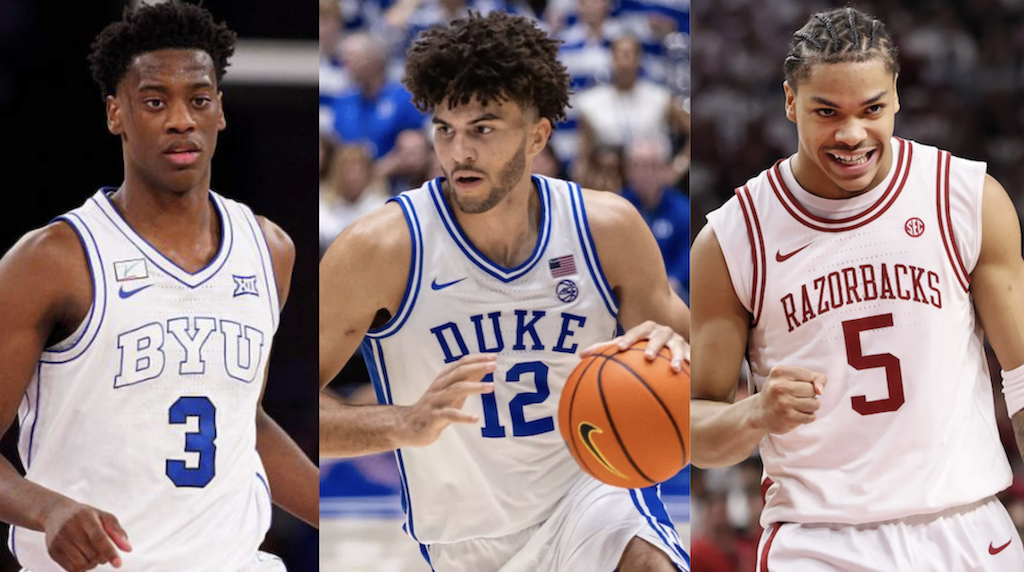
Tanking is a dirty word around the NBA. But can you really blame NBA executives for punting on a season if the result would net them a generational talent? Sometimes you need to take a step back to move forward.
We haven’t seen a draft this rich in talent since 2003, a draft that produced LeBron James, Carmelo Anthony, Chris Bosh, and Dwyane Wade. Darko Milicic was the No. 2 overall pick. Sorry, Detroit Pistons fans. Darko pick still stings.
Three of the top five players selected in the 2003 class became Hall of Famers (Anthony, Bosh, Wade), and LeBron should be the fourth once he decides to hang up his sneakers.
There is no shortage of game changers in the 2026 NBA draft, especially at the top of the draft lottery. Cameron Boozer, AJ Dybantsa, Caleb Wilson, Darius Acuff Jr., and Darryn Peterson are the five names consistently popping up in several mock drafts. Each player brings something special to the table, and you can make a case that any of them could be the No. 1 overall pick.
Need a point guard? Acuff Jr. has all the tools to be an outstanding playmaker. Need a shooting guard? Darryn Peterson is a professional scorer. Need an athletic small forward? Dybantsa is the perfect choice. Need a versatile power forward? Caleb Wilson fits the profile. Need a big man who can be an offensive hub? Boozer is your man.
OneManFastBreak.net put together a comprehensive scouting report on the top 12 prospects with their NBA comparisons.
1-AJ Dybantsa, forward, Brigham Young
NBA comparison: Tracy McGrady
Scouting report: Dybantsa is a gifted athlete who plays with a sharp edge. Dybantsa grew up in Brockton, Mass., the hometown of boxing legends Marvelous Marvin Hagler and Rocky Marciano. He is Brockton tough. Dybantsa is as tough as they come. He is a fierce competitor who embraces challenges. He was the MVP of the 2025 FIBA U19 Basketball World Cup after leading Team USA to a gold medal. He could have gone to any of the blue bloods, but decided to play college ball at Brigham Young. Dybantsa is an athletic, two-way wing with a relentless motor. His physical features are similar to Andrew Wiggins but his offensive game resembles Tracy McGrady’s, especially the one-two pull-up jumper. He has ideal positional size and length (6-9 with a 7-foot wingspan). His 42-inch vertical allows him to elevate over defenders and attack the rim with bad intentions. Dybantsa put together a spectacular freshman season at BYU, including a 43-point performance against Utah that broke Danny Ainge’s school record for most points in a game by a BYU freshman. The Big 12 freshman of the year shouldered much of the BYU scoring burden after teammate Richie Saunders went down with a season-ending ACL injury. Dybantsa led the nation in scoring, averaging 25.5 points per game while shooting 51% from the field. He also averaged 6.8 rebounds and 3.7 assists. He’s the first player to have a season with all those averages and be named a consensus All-American since Larry Bird did it in 1978-79.
2-Cameron Boozer, forward-center, Duke
NBA comparison: Chris Webber
Scouting report: The best part of Cameron Boozer’s game is his consistency. The son of former NBA All-Star Carlos Boozer has been consistently dominant at every level, from high school to AAU to college. “He’s all about winning,” Duke coach Jon Scheyer said about the 2026 AP and Naismith college basketball player of the year. Cameron shares similarities with his father’s game, as both are extremely strong in the block and have Vise-grips for hands. His strong hands allow him to rebound the ball in traffic, and he catches almost everything thrown at him. He isn’t blessed with great explosiveness or a long wingspan. He measured at 6-8 1/2 without shoes at the NBA combine in Chicago, but he has a 7-1 wingspan, which more than makes up for the lack of ideal height. He knows how to use his body well. He relies a lot on physicality to carve out space. “Whatever you need, he can provide,” college basketball analyst Bill Raftery said about the Duke freshman, who averaged a double-double (22 points and 10 rebounds) and shot 56% from the field. His shooting technique from beyond the 3-point arc isn’t textbook, but it goes in 40% of the time. His ability to put the ball on the deck at his size to create offense for himself or his teammates is what separates him from other big men. He has unbelievable instincts, and he can surgically dissect a double team. He always seems to make the right read. He also possesses one of the best two-handed outlet passes you’ll ever see, similar to Wes Unseld and Kevin Love.
3-Caleb Wilson, forward, North Carolina
NBA comparison: Shawn Kemp
Scouting report: Caleb Wilson has the highest ceiling among the Tier 1 prospects. He’s barely scratching the surface of his true potential. He is a springy, athletic 6-9 forward. He is a throwback power forward with a modern twist. If you squint, you might see shades of Kevin Garnett, Jermaine O’Neal, Antonio McDyess, or Shawn Kemp. He competes on both ends of the court and wears No. 8 in honor of the late great Kobe Bryant. Like Kobe, Caleb plays through exhaustion and doesn’t lack confidence. He attacks the rim like the Reign Man and plays defense like the Big Ticket. Wilson put the basketball world on notice in his second college game, dropping 24 points, grabbing seven rebounds, and adding four steals to lead the Tar Heels over Darryn Peterson’s Kansas Jayhawks. Wilson showed off the entire repertoire, dunking over defenders, swishing fadeaway jumpers in the post, tossing lobs on big-to-big action, and picking up full court on defense. His ability to handle the ball in the perimeter makes him an ideal fit in today’s NBA. He is comfortable bringing the ball up as the initiator on offense, and he can also play some small-ball 5. A broken thumb forced Wilson to miss March Madness, and North Carolina struggled mightily without him. The Tar Heels lost to VCU in the first round of the NCAA tournament.
4-Darius Acuff Jr., guard, Arkansas
NBA comparison: Allen Iverson
Scouting report: Hall of Fame coach John Calipari calls Darius Acuff Jr. a “beast.” Calipari knows a beast when he sees one. Coach Cal coached Derrick Rose, John Wall, Jamal Murray, Shai Gilgeous-Alexander, De’Aaron Fox, and Tyrese Maxey. Acuff (6-2, 185) may not possess the size of SGA or the speed of Fox, but his drive and determination, combined with incredible instincts as a point guard, more than make up for his shortcomings. Armed with brick-like shoulders and natural Detroit toughness, Acuff doesn’t shy away from contact. He has a strong core and outstanding balance, allowing him to absorb hits. He has superb footwork. He plants his last step and uses a change-of-pace approach to create angles. Acuff’s body type closely mirrors Stephon Marbury, but his game resembles Allen Iverson. Acuff’s signature game came against Alabama on the road, where he dropped 49 points on 16-of-27 shooting from the field. It was the most points scored by a college freshman since 1990. But the most impressive part about his historic game was that he committed only one turnover in 50 minutes. Texas coach Sean Miller, a former point guard, summed it best while discussing Acuff’s overall impact. “In my time [it goes 34 years], I’ve never seen a point guard better,” Miller said of Acuff, who was the first freshman since Pete Maravich to lead the SEC in points and assists. “Guys like him don’t just come into college basketball very often. He’s a generational player.”
5-Darryn Peterson, guard, Kansas
NBA comparison: Devin Booker
Scouting report: Peterson might be the most polished scorer in the draft. The Naismith prep player of the year in 2025 and consensus five-star recruit possesses a combination of size (listed at 6-4 with a 6-9 wingspan), length, explosiveness, and shot creation. He is a dynamic, three-level scorer who can play either guard spot, but he’s a natural 2 in the NBA. He has a lot of Devin Booker in his game. Peterson has a deep connection with CJ McCollum. Both are from Canton, Ohio, and Peterson has been working out with CJ and his brother, Errick, since he was 12. “After the first workout, my brother called me and said, ‘I’ve never seen anything like this, CJ. He’s just like you but bigger, stronger, and more athletic,” CJ McCollum told ESPN’s Marc J. Spears. The knock on Peterson is his inability to stay on the court. A series of hamstring and cramping issues knocked him out of several Kansas games, including the big showdown against then top-ranked Arizona. The Jayhawks pulled off the major upset against the Wildcats without Peterson. He earned the dubious “DNP” moniker for checking himself out of several games, including a high-profile game at Allen Fieldhouse against AJ Dybantsa’s BYU squad. Peterson scored 18 points in the first half but missed the entire second half. These red flags shouldn’t be brushed aside, and could give some teams enough of a reason to pass on him.
6-Aday Mara, center, Michigan
NBA comparison: Zach Edey
Scouting report: Aday Mara posted ridiculous measurements at the NBA combine. He was listed at 7-3 without shoes with a 7-6 wingspan and 9-9 standing reach. His standing reach was the second-best in combine history behind only Tacko Fall. Mara was a huge reason why the Michigan Wolverines captured their first NCAA men’s tournament title since 1989. The 21-year-old from Zaragoza, Spain, significantly raised his draft stock after impressive performances in March Madness, including a 26-point output on 11-of-16 shooting from the field in the Final Four. Mara made his presence felt on the defensive end as opponents attempted 20.9% of their field goals at the rim when the Big Ten defensive player of the year was on the court, per CBB Analytics. He has excellent hands with a soft touch around the basket. The NBA comparison for Mara is Zach Edey based on size and mobility. It’s very difficult to discover skilled 7-3 centers, and when you do find them, you stash them and you develop them.
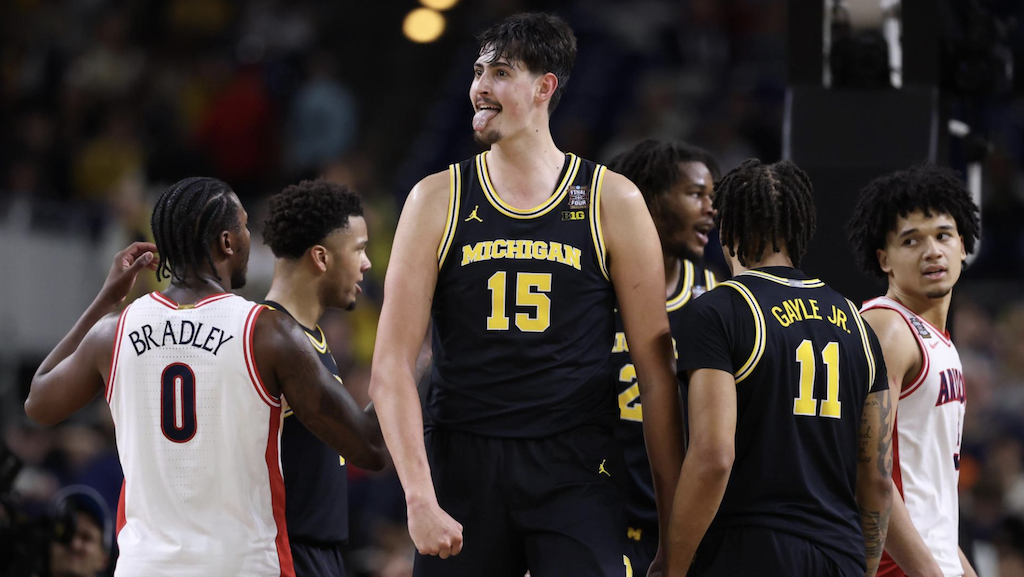
Mara is far more advanced than other center prospects, having played in Europe and at two major college programs (UCLA and Michigan). It might take him a few years to reach his full potential, but teams willing to wait could reap the benefits. “He probably won’t go in the first 10 [NBA draft picks], but in five years [NBA teams] will be like, ‘I probably wish I had taken Mara,'” former Michigan coach John Beilein told the New York Times. The NBA is constantly evolving. Because of the presence of young unicorns such as Victor Wembanyama and Chet Holmgren, there is a bigger need for skilled big men than ever before.
7-Keaton Wagler, guard, Illinois
NBA comparison: Tyrese Haliburton
Scouting report: Wagler has been overlooked throughout his basketball career. He keeps proving people wrong at each stop. He was a four-star recruit coming out of high school. When he arrived in Illinois, he played a role and mostly played off the ball. Illini coach Brad Underwood saw something in his wispy 6-5 guard and made him the primary ball handler. Wagler took full advantage of the opportunity and became the catalyst on an Illinois squad that reached the Final Four. His breakout performance came against Purdue when he dropped 46 points — the most points by a Big Ten freshman in 30 years. He finished the season averaging nearly 18 points, 5.1 rebounds, and 4.2 assists. He is an elite shooter (40% from 3-point range) who operates at his own pace. Despite not possessing elite quickness, he finds ways to score by utilizing sharp footwork and changing direction to freeze defenders. He shot 246 jumpers in total, 40% of which were catch-and-shoot and 60% were off-the-dribble. Those advanced statistics show he can be both an effective on-ball guard or off-ball guard. He’s crafty when he drives to the basket, making it tough on defenders to cut him off. His herky-jerky style enables him to draw fouls. Wagler gives off Tyrese Haliburton vibes.
8-Mikel Brown Jr., guard, Louisville
NBA comparison: Damian Lillard
Scouting report: Brown might be the best pure shooter in the draft, which says a lot because there are plenty of snipers in the 2026 draft. After a slow start to his freshman season at Louisville, the dynamic combo guard exploded for an ACC record 45 points against North Carolina State, including 10 3-pointers. Brown’s hot streak continued the following game as he dropped 29 points against Baylor in a highly competitive matchup against Tounde Yessoufou. He tormented Yessoufou and wasn’t affected by his physicality. Brown is a bigger version of Damian Lillard. Brown isn’t bashful about launching 3-pointers from the logo. He has unlimited range as a shooter (34.4% from 3-point range). He also has outstanding positional size (listed at 6-4). His lethal jumper keeps defenders off balance, and he is shifty enough to get past his man off the dribble if he’s blitzed. At times, he falls in love with his jumper too much, which leads to prolonged cold spells. He can get bullied on defense because of his slight build. But the biggest concern most NBA teams have about Brown is his availability. A back injury sidelined Brown during the ACC tournament and NCAA tournament, and he played in only 21 games in his one season at Louisville. Back injuries are tricky, so Brown must prove it won’t hinder him moving forward.
9-Kingston Flemings, guard, Houston
NBA comparison: Kevin Johnson
Scouting report: Flemings didn’t have the best measurements at the NBA combine (6-2, 183, 6-3 wingspan), but he made up for it with strong performances in the athletic drills. Flemings improved his draft stock by testing well, posting outstanding numbers in the vertical (41 inches), shuttle run (2.69 seconds, second), and three-fourths court sprint (3.07 seconds, second). The combine stats solidified his position as a top-10 prospect. Flemings took over the starting point guard spot after the departure of Jamal Shead, and the Houston Cougars didn’t miss a beat. Flemings possesses elite quickness, and he effectively uses it to beat traps and blitzes. The Cougars were one of the best defensive teams in college basketball because of Flemings’ on-ball defense. He shot a surprisingly high percentage from 3-point range despite poor mechanics. It’s a fixable problem, and it shouldn’t devalue his draft stock. Because of his lack of size, Flemings doesn’t finish well at the rim. He tends to lean on his mid-range shot too much. Flemings’ NBA comp is former Phoenix Suns point guard Kevin Johnson. KJ was a blur and made a living shooting mid-range jumpers.
10-Yaxel Lendeborg, forward, Michigan
NBA comparison: Terry Cummings
Scouting report: Lendeborg was the driving force behind Michigan’s run to the Final Four in March Madness. The “Dominican LeBron” came back for another year in college after dipping his toes in the NBA draft process following two seasons at Alabama Birmingham (UAB). Returning to college turned out to be the best decision as Lendeborg put together an outstanding season at Michigan, leading the Wolverines to a Big Ten conference title and NCAA tournament title. At 23, Yaxel is one of the older players in the draft, but that shouldn’t be seen as a negative. Lendeborg has a blend of power and finesse, much like former Milwaukee Bucks standout Terry Cummings. Lendeborg proved his toughness by playing through an ankle injury in the NCAA national championship game against UConn. He is a versatile power forward who moves well at his size (6-9, 240). He possesses an above-average handle for a big man, and he is comfortable initiating offense. He’s a terrific rebounder and outstanding defensive player who can switch 1 through 5. Even though Lendeborg may have already hit his ceiling, it shouldn’t stop lottery teams from picking him. The first-team All-American is a plug-and-play talent with strong character traits.
11-Nate Ament, forward, Tennessee
NBA comparison: Jabari Smith Jr.
Scouting report: Ament came to Knoxville with a lot of fanfare as a five-star recruit. He’s arguably Rick Barnes’ best high school recruit since Kevin Durant (KD played for Barnes at Texas). Ament showed flashes of what he could be at the next level. He’s more like Jabari Smith Jr. than KD. Ament is a fluid scorer with outstanding positional size (6-10 with a 7-1 wingspan). He shot close to 80% from the free-throw line, which suggests he has the proper shooting mechanics to be a solid two-level scorer. In terms of weaknesses, he struggled against physicality and quicker defenders and seemed overwhelmed at times. He’ll need to bulk up and get stronger to avoid getting pushed around. He averaged 15 points per game in his first 18 games and shot just 28% from 3-point range. He boosted his averages as the season progressed, but his overall 39.9% field goal percentage is a bit alarming given his physical tools. Adding muscle to his 6-10 frame might correct his subpar shooting. He came on strong in the latter stages of SEC competition, stringing together 20-point games, including a 29-point outing against Kentucky.
12-Karim Lopez, forward, New Zealand Breakers (NBL)
NBA comparison: Deni Avdija
Scouting report: Lopez is one of the most intriguing prospects in the draft. The Mexican-born forward began playing professionally in Spain for Joventut Badalona at the age of 14. In 2024, he left Spain and joined the New Zealand Breakers of the Australian National Basketball League (NBL). The NBL has become a solid pipeline for NBA prospects, producing standouts like LaMelo Ball, Josh Giddey, Dyson Daniels, and Alex Sarr. Lopez, who turns 19 this year, could be the next big thing to come out of the NBL. Lopez uses his 6-8, 220-pound frame to get to his spots, and he can go downhill with either hand. He plays with a ton of energy and isn’t bothered by physicality. His big breakout game in the NBL came in January when he dropped 32 points against Melbourne United. He capped off his season with 12 points, eight rebounds, five assists, and two steals in helping the Breakers capture the NBL Ignite Cup. Many scouts view Lopez as a high-risk prospect because he doesn’t have a unique skill that he can hang his hat on. But on the other hand, Lopez checks a lot of major boxes scouts love: good positional size, a lengthy wingspan, and physical toughness.
Joel Huerto is editor and publisher of OneManFastBreak.net. He hosts a sports podcast on YouTube @onemanfastbreak1.